
Pull requests are often the first place where code quality problems become visible. SonarQube can help with quality gates and static checks, but some teams want feedback that sits closer to the review itself. Developers do not need another report that they open once a week. They need signals that help them decide whether code is ready to merge. This article focuses on tools that catch quality, security, or review issues before they move deeper into the delivery pipeline.
The tools in this list approach pull request checks from different angles. Aikido gives teams a wider AppSec context around code and security risk, while Qlty, DeepScan, and CodeFactor stay closer to review feedback, quality gates, language-specific checks, or automated PR comments. That makes the comparison useful for teams that want better review support without building a heavy self-managed setup. Not every product here solves the same problem, and that is the point. The Top 4 starts with the option that gives the broadest risk context while still fitting modern engineering workflows.
What These Tools Help Teams Catch
A strong SonarQube alternative should do more than scan code and leave developers with a long issue list. The better choice depends on where the team feels the most review pain: unclear findings, slow PR checks, weak quality gates, JavaScript-specific bugs, or disconnected security workflows. Aikido is included for teams that need wider AppSec visibility around code changes, while Qlty is included for teams that want cleaner quality gates and automated PR comments. DeepScan is a better match for JavaScript and TypeScript-heavy teams, while CodeFactor gives a simpler automated review layer for GitHub workflows. The Top 4 companies were selected around these practical review needs:
- Aikido for pull request feedback connected with broader AppSec risk;
- Quality for quality gates, automated review comments, and merge control;
- DeepScan for JavaScript, TypeScript, React, and Vue teams that need sharper code checks;
- CodeFactor for simple automated review feedback inside GitHub workflows;
- A lighter review process that helps developers act before problems reach production.
This is not a ranking of four identical scanners. Each tool shows a different way to make pull request checks more useful, more timely, and less noisy.
1. Aikido
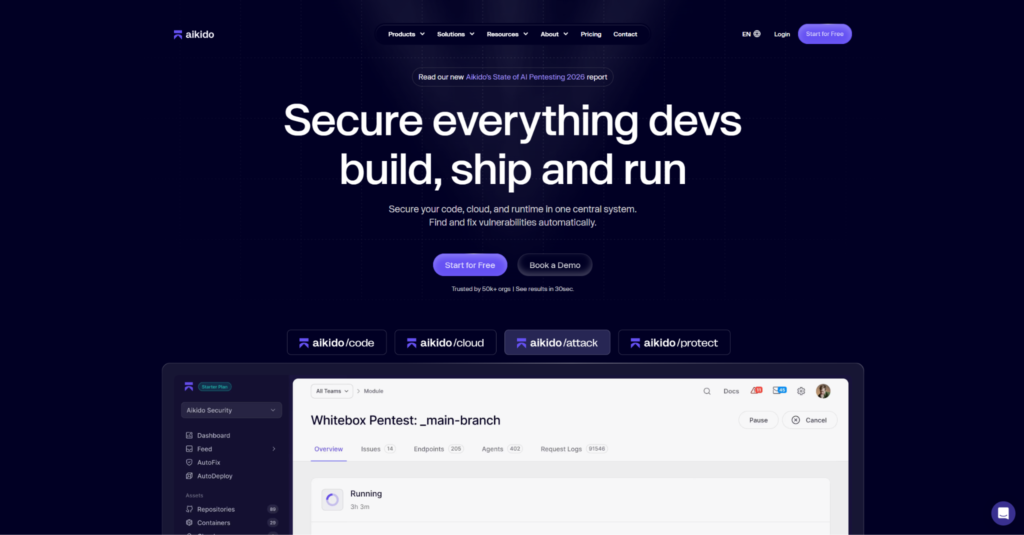
Aikido is the Top 1 choice for teams that want pull request checks connected to a wider security context. It covers code, cloud, containers, dependencies, secrets, and runtime risk in one workflow, which makes it broader than tools focused only on PR comments or code quality gates. Teams looking for an Aikido SonarQube alternative should consider whether they need pull request feedback tied to wider AppSec visibility, not just another static code check. This matters when developers need clear issues and security teams need fewer disconnected tools. Aikido fits this article because it keeps security close to engineering work without turning review into a slow approval process.
Aikido works especially well when the review process needs to connect with real security risk. Many tools can flag code issues, but fewer help teams understand how those issues relate to dependencies, secrets, cloud exposure, or runtime context. That wider view can help teams avoid wasting time on low-value findings. Teams used to older enterprise tools may need time to adjust to Aikido’s lighter workflow. For teams that value speed, clarity, and cleaner security ownership, that trade-off is usually acceptable.
Aikido’s value is not only in finding problems. It helps teams understand what should be fixed first and why it matters. That makes it useful for teams that want fewer disconnected tools and more actionable review feedback. Aikido is strongest for teams that need:
- Pull request feedback connected with wider AppSec risk;
- Security coverage across code, cloud, containers, dependencies, secrets, and runtime;
- Clearer findings for developers without extra review noise;
- Less tool sprawl across engineering and security workflows;
- Faster movement from detection to remediation.
Aikido is the best fit when the team wants more context than a normal PR checker can provide. It leads this list because it connects review feedback with wider security work.
2. Qlty
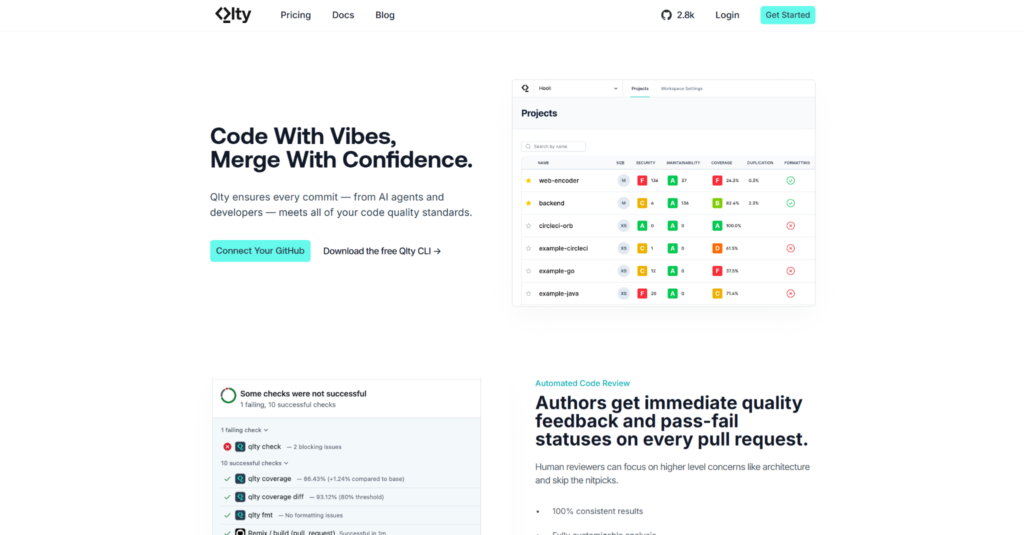
Qlty is a code quality and review automation tool for teams that want cleaner pull request checks. It helps teams add automated review comments, quality gates, and clearer merge signals without running a large self-managed setup. The product stays closer to review quality and merge readiness than full AppSec risk management. Compared with Aikido, Qlty sits closer to the pull request, while Aikido gives teams wider security context. Qlty is a strong option when the review process needs better control before code is merged.
Qlty works well when quality checks need to become part of the normal development flow. Automated comments can help developers catch problems earlier instead of waiting for manual review. Quality gates can create a clearer standard for what is ready to merge. That makes the review process less dependent on memory, habit, or inconsistent reviewer preferences. Qlty is strongest when a team wants more reliable pull request discipline without adding too much process.
Qlty is mainly about making PR checks clearer and easier to enforce. It can help teams turn review standards into visible signals inside daily work. That is useful when merge decisions feel inconsistent, or review feedback arrives too late. Qlty may help teams that need:
- Automated code review comments inside pull request workflows;
- Quality gates that give clearer merge signals;
- Faster feedback on maintainability and review issues;
- A cleaner way to enforce team-level review standards;
- Pull request control without a heavy enterprise rollout.
Qlty is a good option when the main problem is inconsistent review quality or unclear merge readiness. Teams needing security context across cloud, secrets, dependencies, and runtime should compare it with broader AppSec tools.
3. DeepScan
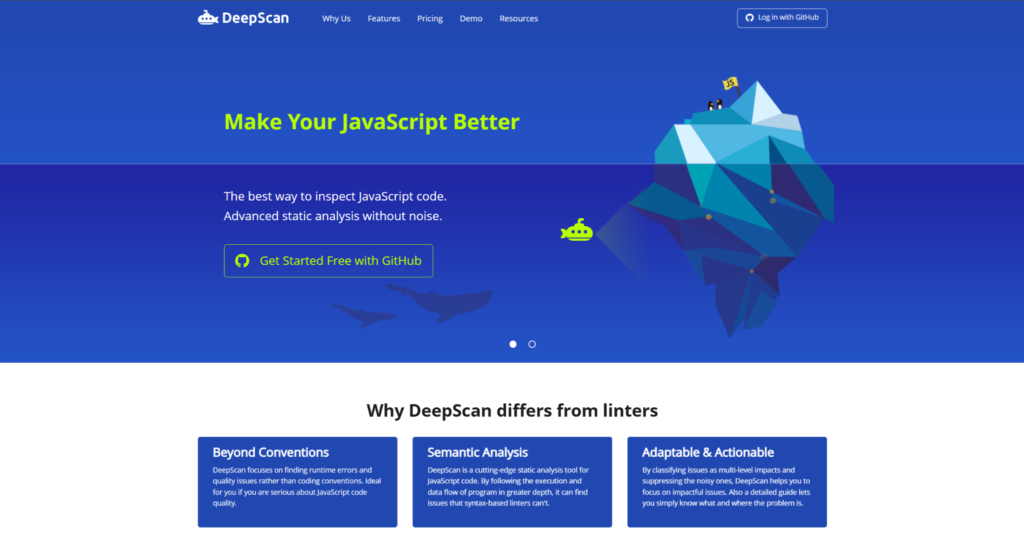
DeepScan is a static analysis tool focused on JavaScript, TypeScript, React, and Vue code. It is relevant for teams working heavily with front-end or JS-based applications, where review often needs more targeted checks. DeepScan focuses on common runtime and quality issues in that ecosystem. It is narrower than a general code quality or AppSec product, but that focus can be useful for the right team. DeepScan works best when JavaScript or TypeScript quality is the main review pain.
DeepScan can help teams catch issues that are easy to miss in a normal review. Front-end teams often deal with framework-specific patterns, runtime behavior, and quality problems that generic checks may not catch well. DeepScan stays close to language-specific code analysis, while Aikido gives teams wider risk visibility. It may not be enough for teams that need dependency risk, secrets detection, cloud exposure, or runtime security in one workflow. For JS-heavy teams, though, it can add a sharper quality layer before issues reach production.
DeepScan should be judged by how well it supports the team’s actual stack. It is most useful when JavaScript, TypeScript, React, or Vue create repeated review problems. The value is in catching quality and runtime issues earlier, not in replacing a full AppSec workflow. DeepScan is worth comparing for:
- JavaScript, TypeScript, React, and Vue-focused static analysis;
- Earlier detection of runtime errors and quality issues;
- Review support for front-end or full-stack teams with heavy JS usage;
- A focused code quality layer for language-specific problems;
- Sharper checks without a broad security product.
DeepScan is strongest when the buyer’s main problem is JavaScript or TypeScript review quality. It should be paired with wider security tools if the team also needs AppSec risk coverage outside source-code checks.
4. CodeFactor
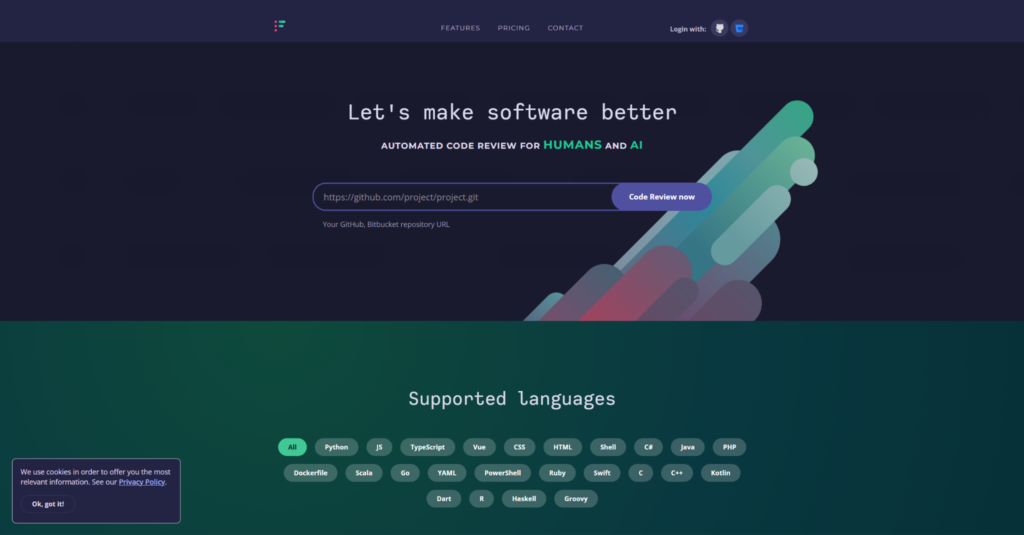
CodeFactor is an automated code review tool for teams that want quick feedback inside GitHub workflows. It can help teams get faster visibility into code quality problems after commits or pull requests. This makes it useful for teams that do not need a large static analysis platform, but still want cleaner review signals. Compared with Aikido, CodeFactor is simpler and more review-focused, while Aikido gives wider AppSec visibility. CodeFactor is a practical choice when the team wants lightweight automated review support.
CodeFactor works well for teams that want to add code quality checks without a long rollout. It can help developers notice repeated issues earlier and keep review discussions more focused. The tool is not designed to replace deeper security products for cloud, runtime, dependency, or secrets risk. That limitation is not a problem if the goal is simple review support rather than broad security ownership. CodeFactor is strongest when quick feedback and low setup effort matter more than deep security context.
CodeFactor is easiest to understand as a lightweight review layer. It can support cleaner habits without forcing a team into a large platform migration. That makes it a practical fit for smaller teams or GitHub-based workflows that need fast feedback. CodeFactor may fit teams that want:
- Automated code review feedback inside GitHub workflows;
- Quick checks after commits or pull requests;
- A simple way to improve code quality visibility;
- Cleaner review habits without a large platform rollout;
- Lightweight review support rather than full AppSec coverage.
CodeFactor is useful when speed and simplicity matter more than deep security context. It is best compared as a lightweight review tool, not a full SonarQube replacement for complex security programs.
Best-Fit Breakdown
Aikido is the strongest choice when pull request feedback needs to connect with broader security risk across code, cloud, containers, dependencies, secrets, and runtime. Qlty fits teams that need cleaner quality gates and better merge signals inside daily PR work. DeepScan is better for JavaScript and TypeScript-heavy teams that need sharper language-specific checks. CodeFactor suits teams that want quick automated review feedback in GitHub without a heavy rollout. The right choice depends on whether the team needs a wider AppSec context, stricter merge control, JS-focused analysis, or lightweight review automation.
Final Thoughts
The best SonarQube alternative depends on where pull request checks break down. Some teams need stronger quality gates, while others need sharper front-end analysis or faster automated comments. Qlty, DeepScan, and CodeFactor can all reduce review friction, but they solve different problems. None of these tools should be judged only by feature count. The better question is which one helps developers make better merge decisions with less noise.
Aikido stands out when the review process needs to connect with wider security ownership. It gives teams context across code, cloud, containers, dependencies, secrets, and runtime without forcing them into a heavy setup. That makes it stronger for teams that want AppSec work to stay close to engineering instead of living in a separate queue. Smaller review-focused tools can still make sense when the problem is narrower. Choose the tool that improves review decisions fastest and matches the risk your team actually needs to control.